



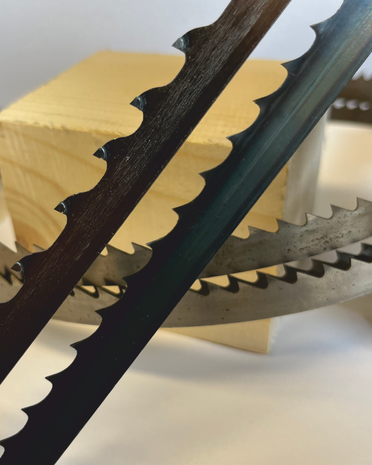
Band saw blades for wood: hardened, unhardened and carbide teeth. What is the difference?
16
Full article
Wood and metal are standard, yes. But you may also find yourself cutting a different, perhaps less common material. How should you approach this? When should you choose a band saw blade and when is a band knife or wire the better option? We are happy to advise! We have been in the industry for over 30 years and customers come to us with all kinds of questions and requirements. Thanks to this, we have become experts in cutting anything – and we will help you find the right solution too.
1) HARD MATERIALS – band saw blades we most commonly recommend |
|
| Material to be cut: |
Common wood |
| Our recommendation: | carbon band saw blades with hardened teeth (ideal balance of performance and price) |
| Suitable tool: | band saw blade Carbon Flexback |
| Material to be cut: |
Exotic wood and some wood composite materials |
| Our recommendation: | carbide band saw blades |
| Suitable tool: | band saw blade Carbide Wood or Carbide SetTooth |
| Material to be cut: |
Tool and special alloys |
| Our recommendation: | carbide band saw blades |
| Suitable tool: | band saw blade Triple Chip or SetTooth |
| Material to be cut: |
Ice |
| Our recommendation: | carbon band saw blades |
| Suitable tool: | band saw blade Carbon Flexback |
| Material to be cut: |
Metals |
| Suitable tool: | band saw blade Epic GP, SiClone or X51 (XP) |
2) ABRASIVE MATERIALS – band saw blades we most commonly recommend |
|
| Material to be cut: |
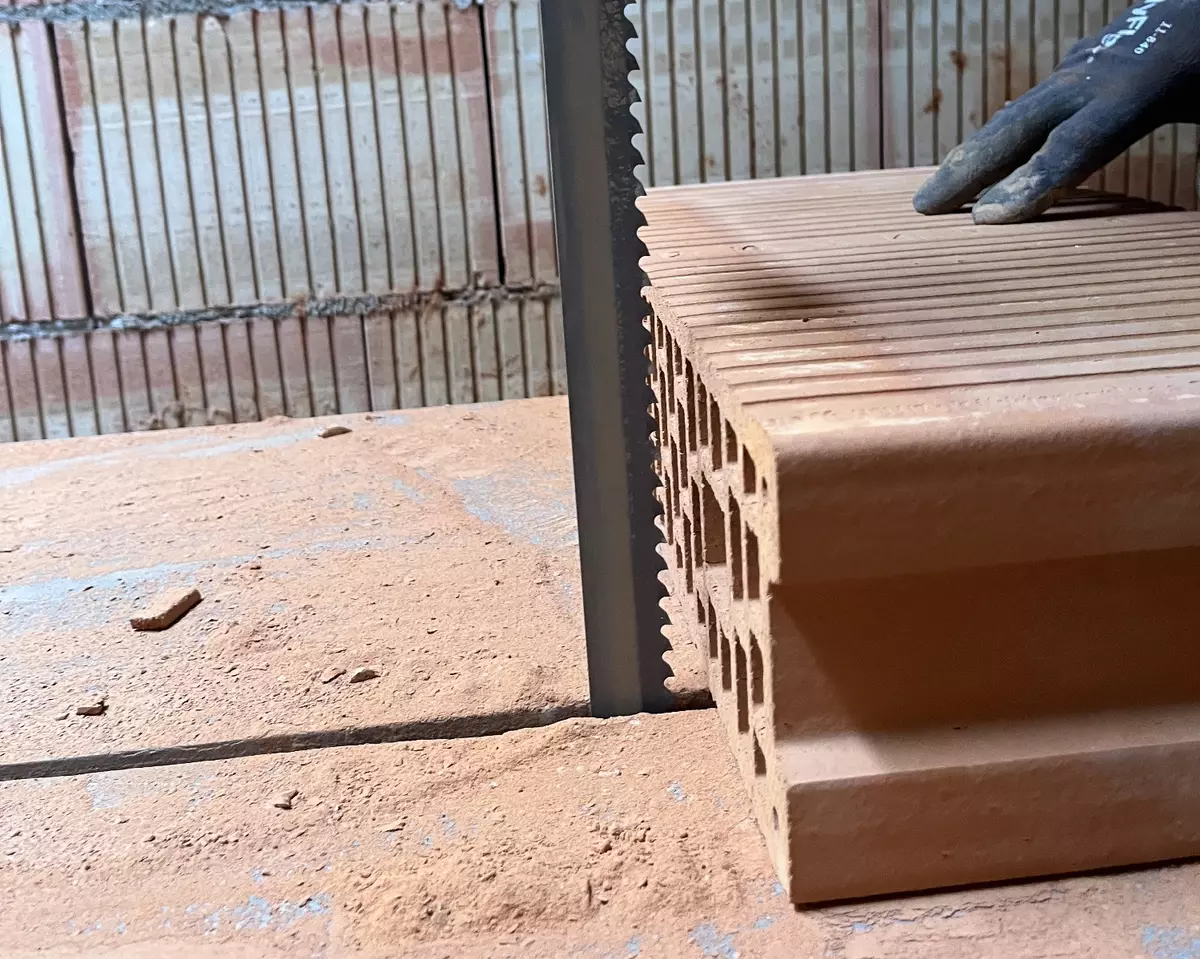
Aerated concrete, Ytong, fired bricks (red bricks), fireclay bricks and other porous materials |
| Our recommendation: | we often recommend carbide band saw blades with teeth |
| Suitable tool: |
band saw blade BricksCut, C-grit, or the diamond band saw blade D-grit |
3) COMPOSITE MATERIALS – band saw blades we most commonly recommend |
|
| Description: | These are materials that often contain some abrasive materials or hard materials. When choosing a band saw blade, it is necessary to take into account sufficient durability as well as an optimum price. |
| Material to be cut: |
Tyres |
| Our recommendation: | band saw blades with a carbide grit edge |
| Suitable tool: | band saw blade C-grit |
| Material to be cut: |
Pallets |
| Our recommendation: |
special bimetal band saw blades for pallet dismantling |
4) DIFFICULT-TO-CUT MATERIALS – band saw blades we most commonly recommend |
|
| Material to be cut: |
Concrete, glass and other materials on which the blades mentioned so far are destroyed |
| Our recommendation: | diamond band saw blades |
| Suitable tool: |
band saw blade D-grit |
5) SOFT MATERIALS – we most commonly recommend band knives |
|
| Description: | These are often materials that can be compressed or are otherwise flexible. A typical feature of these materials is that the cutting tool can penetrate them without forming a kerf or producing cutting waste (sawdust, dust, etc.). |
| Material to be cut: |
Leather, foam (foams), textiles, paper |
| Our recommendation: |
There are various types of band knives for soft materials: |
6) Materials for which we most commonly recommend cutting wires |
|
| Material to be cut: |
Foam, foams, polyurethane, paper, polystyrene, various types of wadding |
We do not currently have all the recommended products in our range. Some materials are very uncommon and, in such cases, we have to identify a suitable solution for the customer individually. However, we are able to supply a cutting tool for almost any material and for any machine with a continuous band or wire. Write to us in the comments what you need to cut on your band saw – we will be happy to help and advise you.

