


Why do bandsaw blades for metal break? The most common problems
6
Full article
We weld your bandsaw blade to the length your saw needs, and we stand behind the weld. We show you how to recognise a quality weld, when a crack at the weld means the weld is faulty, and how our warranty and claims process works.
Welding
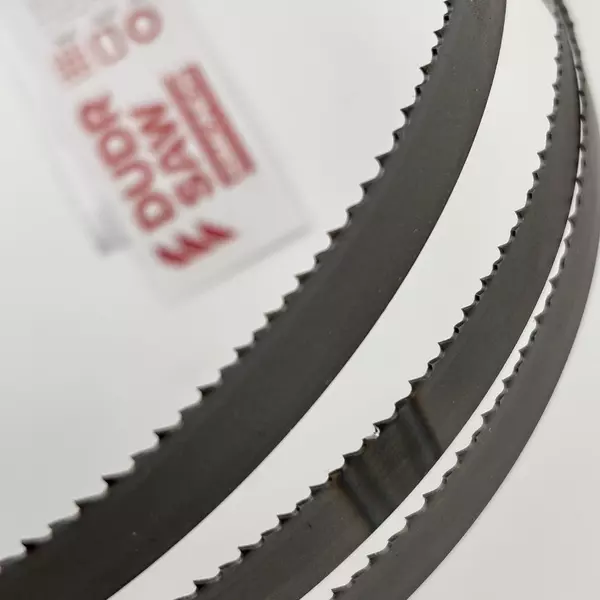
We weld Simonds blade stock to the length your saw needs. We join the blade ends by butt welding: we place them against each other and an electric current fuses them together without filler metal. We weld on German IDEAL BAS 340 semi-automatic welders.
The heat of welding changes the strength and flexibility of the steel at the weld. That is why we first grind off the excess material around the weld and only then anneal the clean weld. It takes more work than annealing straight after welding, but it is more precise: the weld then has properties comparable to the rest of the blade. We don't polish the weld afterwards, so you can see that it is straight and free of irregularities.
On our About us page, we show how a blade is made in our shop, from blade stock to packing.
Jump to:
Made to length
We weld your blade only after you order it, exactly to the length your saw needs. Ordering takes three steps:
Inspection
The weld is a sensitive spot on a bandsaw blade. You can recognise a quality weld by three things:
Diagnosis
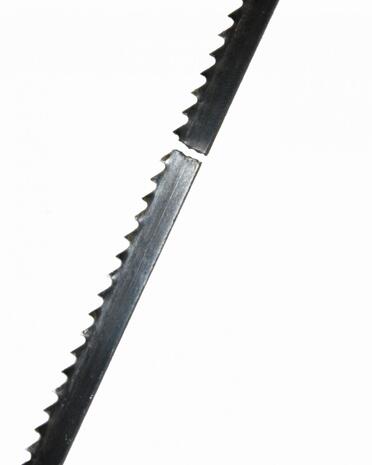
A weld is slightly more prone to material fatigue than the rest of the blade. But a well-made weld lasts a long time, so a crack at the weld may or may not be a weld defect. The situation will tell you which it is:
Probably a faulty weld
End of service life
Saw-related cause
In the articles Why do bandsaw blades for wood break? and Why do bandsaw blades for metal break?, we discuss saw-related causes according to where the blade cracks.
Warranty
We stand behind our welds. If a blade from us cracks at the weld, we will replace it with a new one or work with you to find out why it is cracking. The weld warranty is valid for 2 years from purchase.
Warranty applies
Warranty does not apply
From practice
Usually it is not worth it. A cracked blade is often distorted or has broken teeth, and every extra weld makes it shorter, so it may no longer fit your saw. That is why we send a new blade when we accept a claim.
After four months, your blade is still under warranty: the weld is covered for 2 years from purchase. Photograph the crack and the blade label and send both photos to info@dudrsaw.eu. We will assess whether it is a weld defect or the end of the blade's service life.
Usually not. We assess weld claims from photos of the cracked area and the label.
If blades of different brands crack, look for the cause in the saw and its set-up first. The article on blades for wood or on blades for metal will help.
Yes, we weld the blade to the length your saw needs. You will find the size on the label of your old blade or in our bandsaw database.
Having trouble with a blade from us? Describe it in the discussion below the article or email info@dudrsaw.eu.
Good day, it is enough to photograph the broken weld and send the photo to the email address info@simonds.cz. After assessment, we will send you a new blade or help you resolve the cause that is causing the breakage.
Sincerely, Team Dudr.