
Proper maintenance: How to extend the service life of band saw blades?
Proper maintenance of band saw blades helps maintain high cut quality, extend tool life and reduce costs in the long run. Based on our own experience and feedback from customers, we have prepared a clear and practical guide on how to properly care for Dudr Saw band saw blades. Do you have any additional tips or methods from your own experience for proper blade handling? Share them with us in the comments below the article.
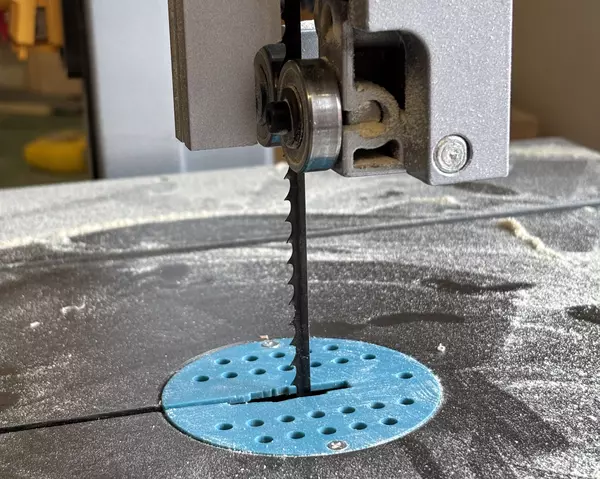
The longevity of band saw blades is, in a way, a joint effort between the manufacturer and the customer. High-quality manufacturing, welding and careful packaging are ensured by our company, Dudr Saw, while proper blade use, regular maintenance and correct machine setup depend on the machine operator. Good habits and routine steps are essential for reliable cutting.
Proper handling of band saw blades helps them reach their full potential:
- maximize durability and overall service life;
- maintain consistently high cut quality;
- save time and costs in the long run.
Over the years, we have observed that premature wear or blade cracking is most often related to operating conditions (handling and storage, blade setup on the machine, cleanliness, cooling, etc.) rather than to manufacturing quality. That is why we have prepared a practical overview of the principles of proper care and handling of band saw blades. These general principles are based on manufacturing practice, customer experience and band saw manufacturers’ recommendations.
1) Storage of band saw blades
- Storage and corrosion protection. Blades should be stored indoors (in a workshop, warehouse, etc.) in an environment with a stable temperature and a low risk of moisture condensation. Frequent temperature fluctuations increase the risk of corrosion, so be careful with unheated halls and storage areas near doors where temperatures change rapidly. Corrosion can develop unnoticed and may only surface when the blade is under load during cutting. For longer-term storage, it is a good idea to protect the blades – for example, by keeping them in their packaging, in a dry box, or by using a suitable rust inhibitor.
- Tooth protection. The teeth are the most sensitive part of the band saw blade – any contact with hard surfaces or sharp objects (such as the floor, shelving, or other blades) can cause micro-damage. We recommend using protective packaging during storage (original packaging, cardboard covers, or plastic tooth protectors) to prevent mechanical damage and metal-on-metal contact between the teeth.
- How to store the blade. Band saw blades should be stored coiled or hung in a way that prevents deformation caused by their own weight or by pressure from other objects. It is important to coil the blade smoothly and evenly, without twisting or sharp kinks. Incorrect coiling increases internal stress in the material and can compromise cutting stability during future use.
2) Blade setup and machine adjustment
- Controlled installation and removal of the blade. A coiled blade stores mechanical energy. If handled carelessly, it can suddenly spring open, which may lead to blade deformation, tooth damage or injury. The same applies when mounting or changing the blade on the machine. Handle the blade with care to avoid unnecessary impacts or catching it inside the saw housing. Before installing the blade, it is a good practice to clear any debris and chips from the machine. When removing the blade, the tension must always be fully released by ensuring the band wheels are completely loosened.
- Blade position and tension. Mount the blade onto the loosened band wheels and place it into the correct working position according to the machine specifications (refer to the user manual) before tensioning. If the blade is under-tensioned, it will drift in the cut and may even slip off the wheels. Excessive tension, on the other hand, puts excessive strain on the material and can lead to premature blade breakage. Correct blade tension can be verified using a tension meter or, for a quick check, with your finger.
- Tracking (monitoring blade travel on the wheels) after tensioning. After tensioning, it is advisable (on wood band saws) to check and fine-tune blade tracking on the wheels. Tracking can be verified by hand – slowly rotate the upper wheel manually to ensure the blade remains centred and does not shift on the wheels. Warning: Take extra care when turning the wheels for checking purposes with the housing covers open. Moving wheels and the band saw blade create a risk of injury.
- Correct adjustment of blade guides. After tracking, the guides must be adjusted – they are used to stabilise the blade in the cut, not to hold it in place by force. The guides should be set as close to the blade as possible to prevent lateral deflection, but without applying unnecessary pressure. They must support only the blade body and must never touch the teeth, as contact would lead to rapid wear or damage. Also, pay attention to the back edge of the blade so that, when running idle, it does not touch the flange (on metal band saws) or the back support guides.
- Cutting speed. As a general rule, higher speeds are used for cutting wood than for cutting metal. The teeth must effectively penetrate the material and form a chip. In wood cutting, factors such as material hardness and the type of application (high-volume cutting versus fine work or scroll cutting) play a key role. In metal cutting, the material grade and alloy composition are particularly important. Cutting speed must always be paired with an appropriate feed rate. Recommended cutting speeds can be found in the manuals provided by the machine and blade manufacturers.
3) Band saw blade care during cutting
- Cooling in metal cutting. For metal-cutting band saw blades, effective cooling during operation is essential for optimal performance and a long service life. The coolant reduces friction and heat generation while helping to flush chips away from the cutting zone. Poor or insufficient cooling leads to premature dulling of the teeth and can result in severe damage to the blade. Selecting the correct type of coolant depends on the specific material grade being cut.
- Carefully follow the instructions for preparation and dosing. The coolant must be diluted precisely as directed to ensure maximum efficacy. Regular monitoring of both concentration and alkalinity (pH levels) is also essential. The coolant flow must be steady and precisely directed at the cutting zone so that it functions effectively without unnecessary runoff. For more details, refer to our dedicated article: Cooling a band saw blade for metal.
- Lubrication and resin build-up prevention in wood cutting. Log-cutting band saw blades frequently accumulate resin, causing wood chips and sawdust to stick to the blade body. This also poses a high risk of clogging the gullets (the spaces between the teeth). To maintain optimal cut quality and keep the blade fully functional, it is recommended to use suitable lubricants or simple drip lubrication systems. In practice, operators commonly use water-based solutions, such as water mixed with washing-up liquid or baking soda. During winter, diesel fuel is often used; however, caution is required as diesel degrades and damages the drive V-belts on the saw.
- Dust and chip extraction. A properly functioning extraction system on a band saw (especially when cutting wood) significantly minimizes debris accumulation in the cutting area, on the band wheels, and around the guides. Reducing this buildup lowers friction, prevents blade overheating, ensures more stable tracking, and decreases the risk of chips being dragged back into the cut or adhering to the blade body.
- Clean brushes and wipers. To prevent sawdust and chips from being carried back into the cut and building up on the band wheels, all brushes and wipers must be kept clean and in good working condition. Their primary function is to keep the entire band saw blade (the teeth, gullets and blade body) free of adhered debris. On larger metal band saws, rotary brushes are used to sweep away chips and prevent them from fusing to the cutting edge of the teeth. A clogged cutting edge significantly reduces cutting efficiency.
4) Post-operation blade maintenance and inspection
- Releasing blade tension. After finishing work, it is important to release the blade tension. Leaving a band saw blade fully tensioned during periods of inactivity subjects the machine frame, band wheels, and the blade itself to prolonged, unnecessary stress. This practice can lead to premature material fatigue, reduced cut quality, or premature blade breakage.
- Inspection of the blade, cutting edge, and tooth set. After completing the operation, it is recommended to briefly inspect the band saw blade for any developing micro-cracks, chipped teeth, or adhered debris (such as sawdust and resin). However, visual inspection alone may not always reveal hidden defects, as a comprehensive inspection is difficult to perform while the blade remains mounted on the machine. Operators should therefore stay alert to warning signs during operation, such as blade jumping, unusual noise, crooked cuts, or other non-standard behavior.
- Cleaning the band saw blade. For safe and effective maintenance, the band saw blade should be cleaned using a cotton cloth, soft brushes, degreasers, or resin removers, depending on the nature of the contamination. Never use hard or metal tools, as they may damage the cutting edge. Frequent and regular cleaning of the machine is also important.
- Estimating blade service life. A new blade should not be used in an unfinished cut made by an old blade. Therefore, it is essential to monitor blade behavior during operation and either proactively address early warning signs or replace the blade in a timely manner.
- Blade servicing: When can the teeth be sharpened and set? Most band saw blades cannot be resharpened and are typically replaced once they become dull. Repeated sharpening and tooth setting are only possible for log band saw blades (e.g., RipperS Premium).


